


In this article you'll learn everything about:
Basic facts about pond cleaning
Why is regular pond cleaning important?
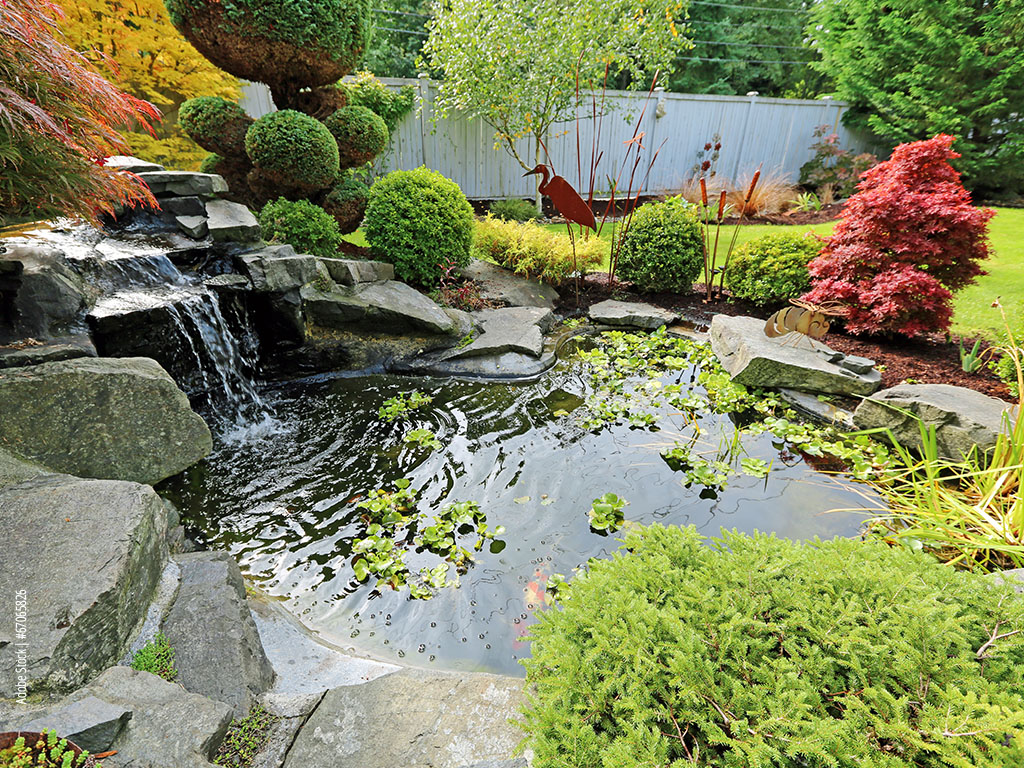
Regular cleaning helps maintain the biological balance in the pond and keeps the water clear over the long term. A garden pond is a sensitive ecosystem: without maintenance, organic materials such as leaves, fish waste, and plant debris collect on the bottom and form sludge. This increases the nutrient load in the water, which can promote algae growth and reduce oxygen levels. This puts stress on plants and fish — and can quickly turn a beautiful garden feature into a problem.
What steps are involved in pond cleaning?
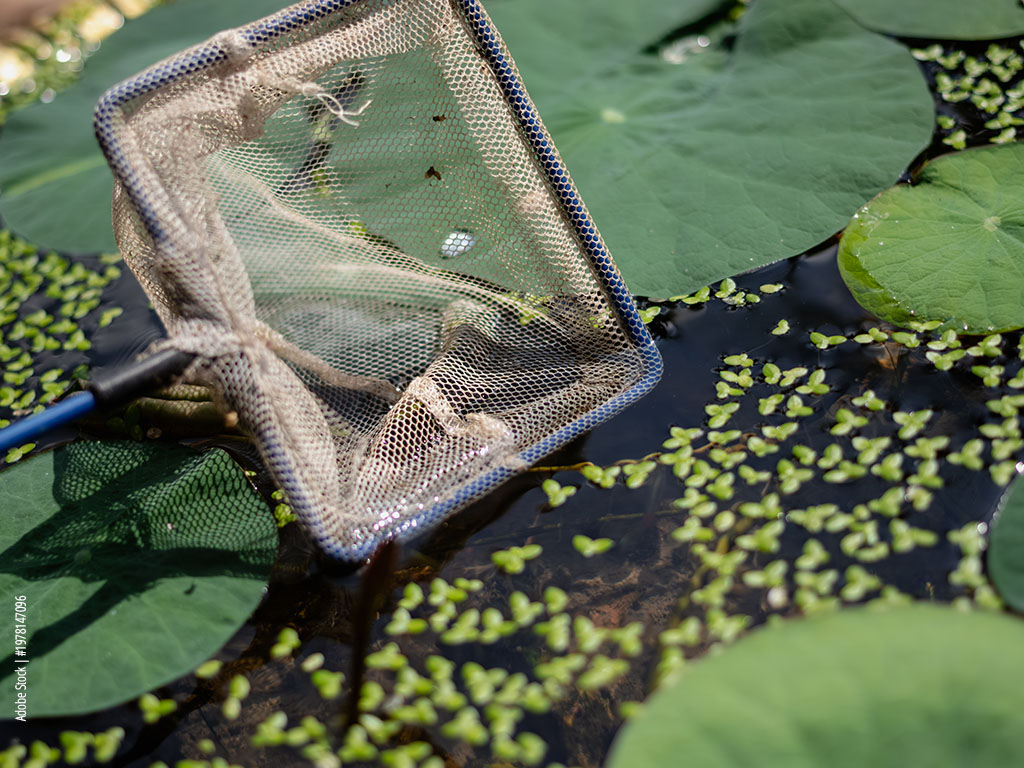
In summer, you should regularly remove algae and other dead leaves with a pond net to help prevent sludge from forming.
You clean a small to medium-sized garden pond in four basic steps: First, pump out part of the water, then carefully remove sludge and algae from the pond edge, the pond liner, and the stones. Next, clean the filter system and pump before refilling the pond with fresh water. Regular maintenance, stable water values, and sufficient oxygen are just as important as the actual cleaning itself to preserve the ecological balance in the pond.
When and how often should you clean your pond?
Our pond calendar will tell you!
The best time for a thorough pond cleaning is spring — ideally between March and May, once frost is no longer expected. During this time, you can remove sludge, plant debris, and algae that have built up over the winter and prepare the pond for the warmer season.
For a light spring clean, it is often enough to remove leaves, dead plant material, and blanket weed, as well as check the filter and pump. A more extensive intervention is only advisable if the pond bottom is heavily silted, there is a foul smell, or fermentation gases appear on the surface. In many cases, one deep clean in spring is sufficient. If your garden pond contains fish, cleaning should be especially gentle and well planned so that water values and microorganisms remain as stable as possible.
In summer, gentle maintenance is usually enough: regularly remove algae, leaves, and dead plant parts.
In autumn, you should skim leaves from the water surface and cut back some plants if necessary. A pond net can also help protect the pond from falling leaves and debris during the autumn and winter months. General removal of dead plant remains is often more important than a full deep clean.
Our pond calendar summarizes the seasonal checklist for you:
| Season | Focus of care | Most important task |
|---|---|---|
| Spring | Deep cleaning | Remove sludge & algae; check equipment |
| Summer | Oxygen & algae | Skim off algae, check water level during hot weather |
| Autumn | Prepare winter protection | Install a leaf net, cut back plants |
| Winter | Dormant phase | Store pond equipment safely |
❗But be careful: cleaning too frequently can disrupt the ecosystem — so a bit of sensitivity is required.
Which tools are useful for pond cleaning?
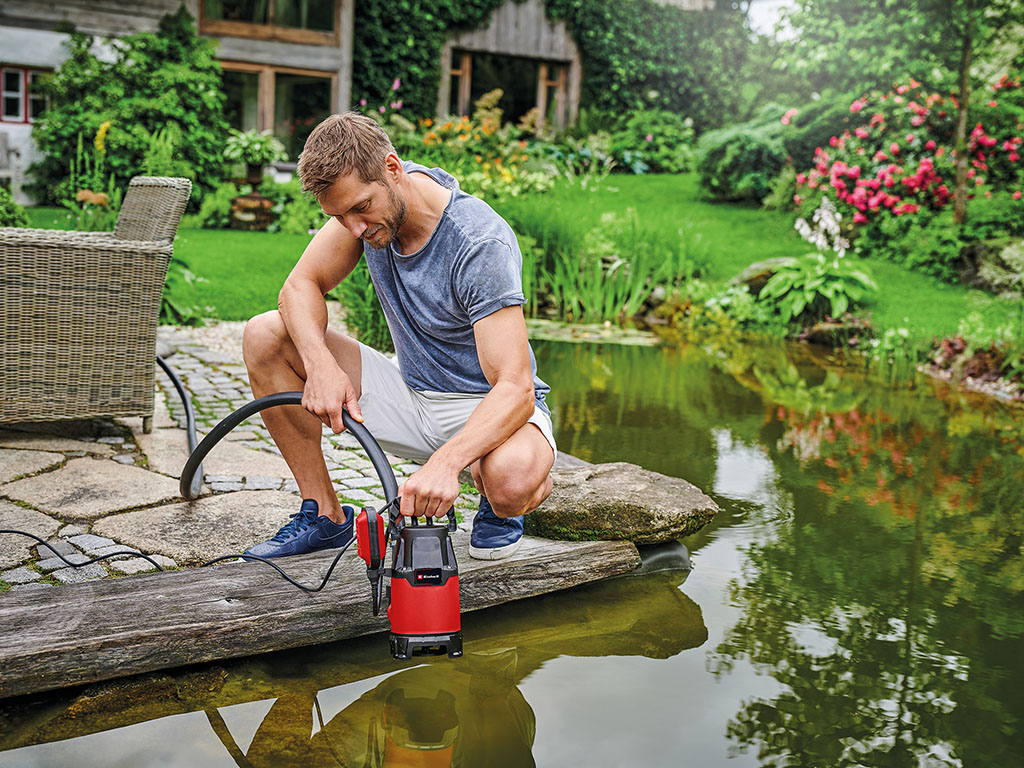
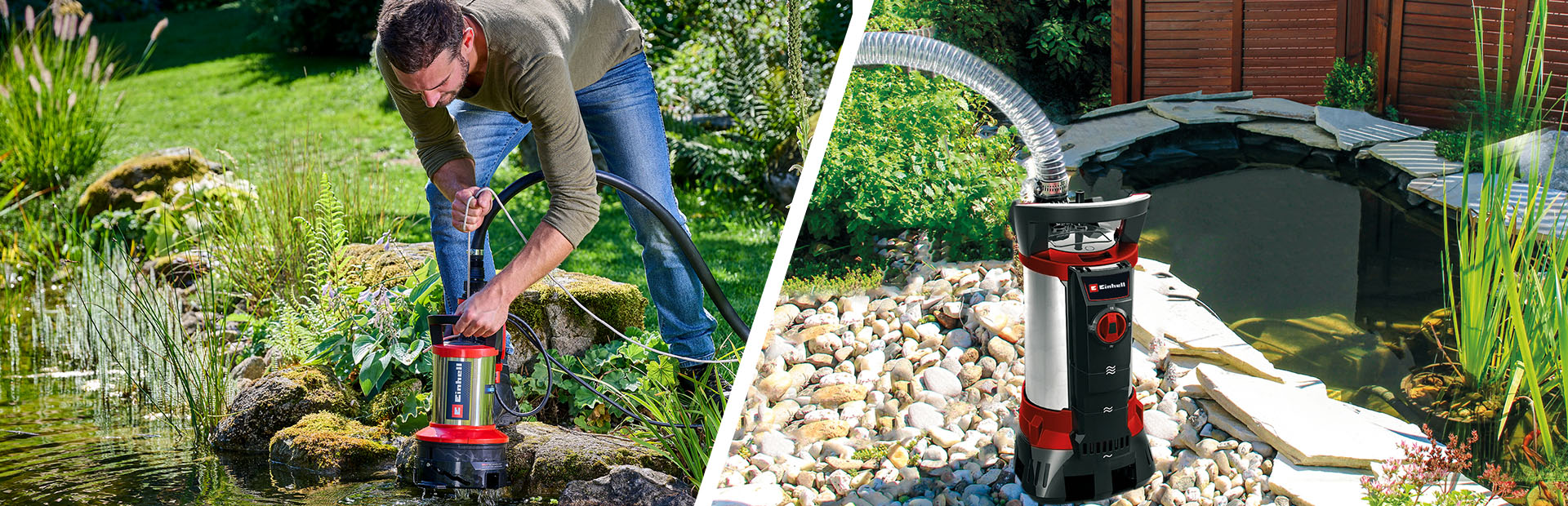
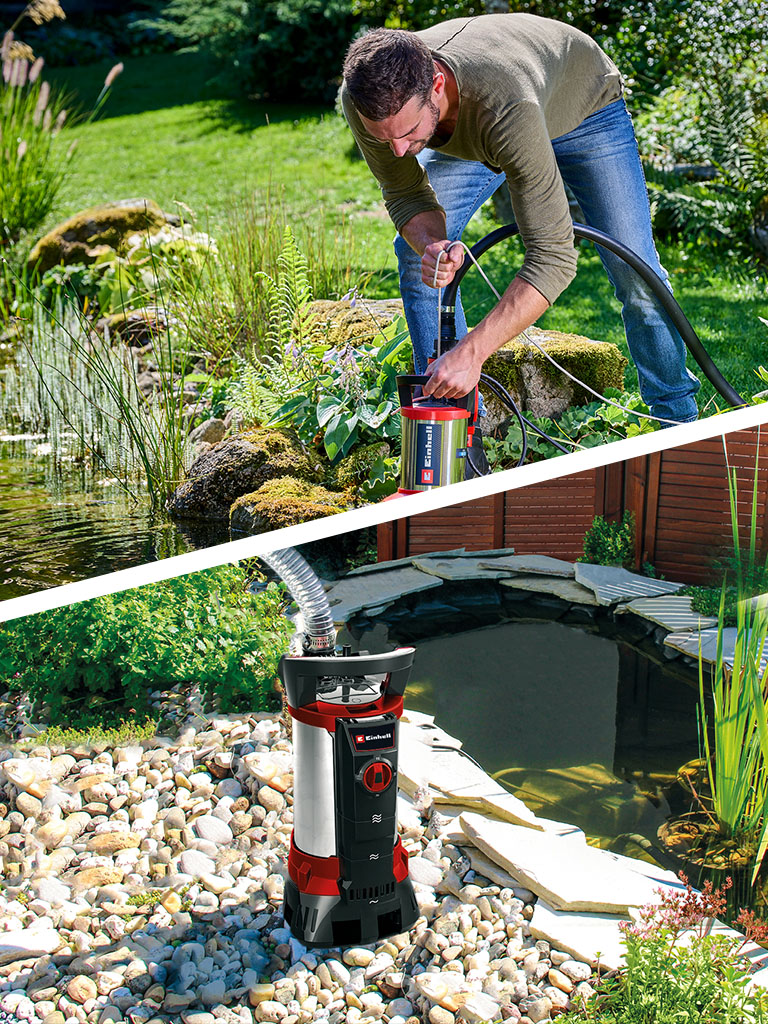
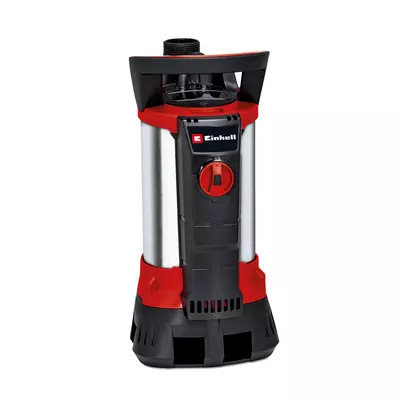
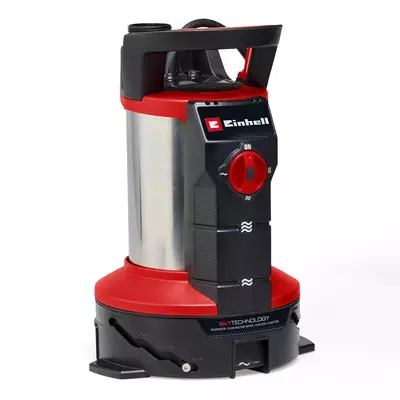
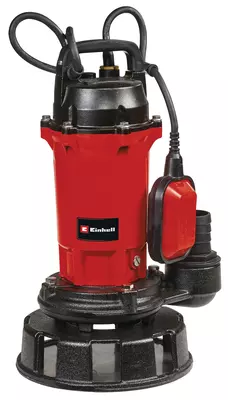
With the right dirty water pump, pumping out the pond water is easy.
For maintaining plants around the pond:
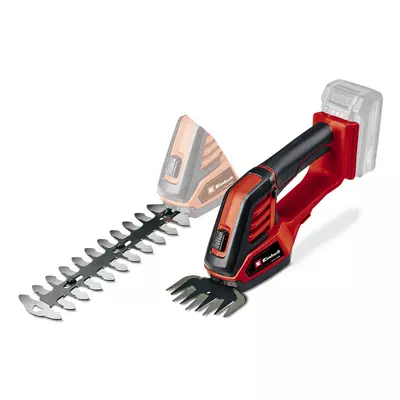
- Grass and shrub shears to keep bank plants, grasses, and smaller plants around the pond in shape, for example the GE-CG 18/100 Li-Solo.
For regular cleaning tasks:
- A pond net to remove leaves, algae, and other debris from the water surface.
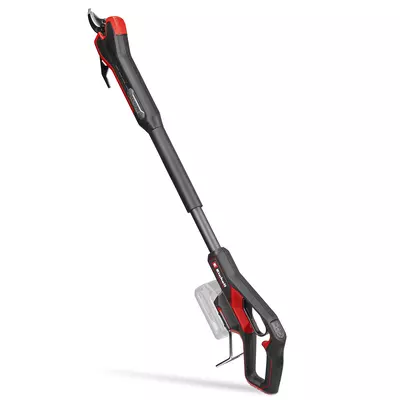
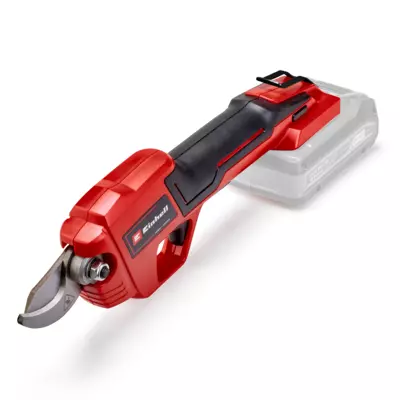
- Compact cordless pruning shears to cut back dead plant parts or overhanging branches around the pond, such as the GE-LS 18 Li-Solo or, for hard-to-reach areas, the GP-LS 18/35 Li BL-Solo.
For deep cleaning:
- A dirty water pump to pump out dirty pond water in a controlled way and reduce the cleaning effort.
- A pond sludge vacuum, such as the PXC-powered Heissner Pond Sludge Vacuum F636-PXC*, to remove sludge and deposits as gently as possible.
- A temporary holding tank for fish, in case animals need to be moved temporarily during more extensive cleaning.
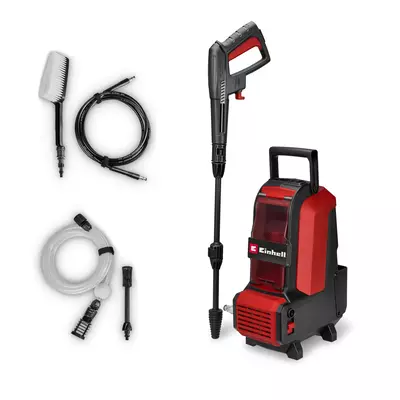
- A pressure washer such as the HYPRESSO 36/105 should only be used selectively, for example on dirty stone surfaces or accessories around the pond — avoid using it on delicate pond liners and sensitive surfaces.
*Heissner GmbH is an official cooperation partner of Einhell Germany AG. Thanks to the Einhell Power X-Change battery platform, the Heissner F636-PXC pond sludge vacuum can be used flexibly with all PXC batteries and chargers.
In 6 steps to clear water: Here’s how to proceed
Safety note:
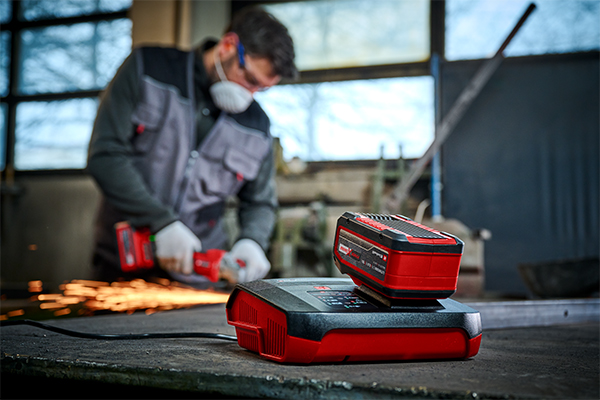
When working with electrical devices near water, caution is required. Before cleaning, switch off all mains-powered devices such as UVC clarifiers or old pond pumps. With our Power X-Change tools, you can work cordless. This is not only more convenient, as you do not have to run extension cables through the wet garden, but also reduces the risk of electrical accidents caused by damaged cables in the water. And that’s not all: our specially developed PXC SEALED batteries provide maximum peace of mind. Thanks to precise housing sealing and IP57 protection, the sensitive electronics inside are optimally protected against splashing water and moisture. Even if your hands are wet while handling the pump or the battery is lying in damp grass, the technology remains safe and dry.
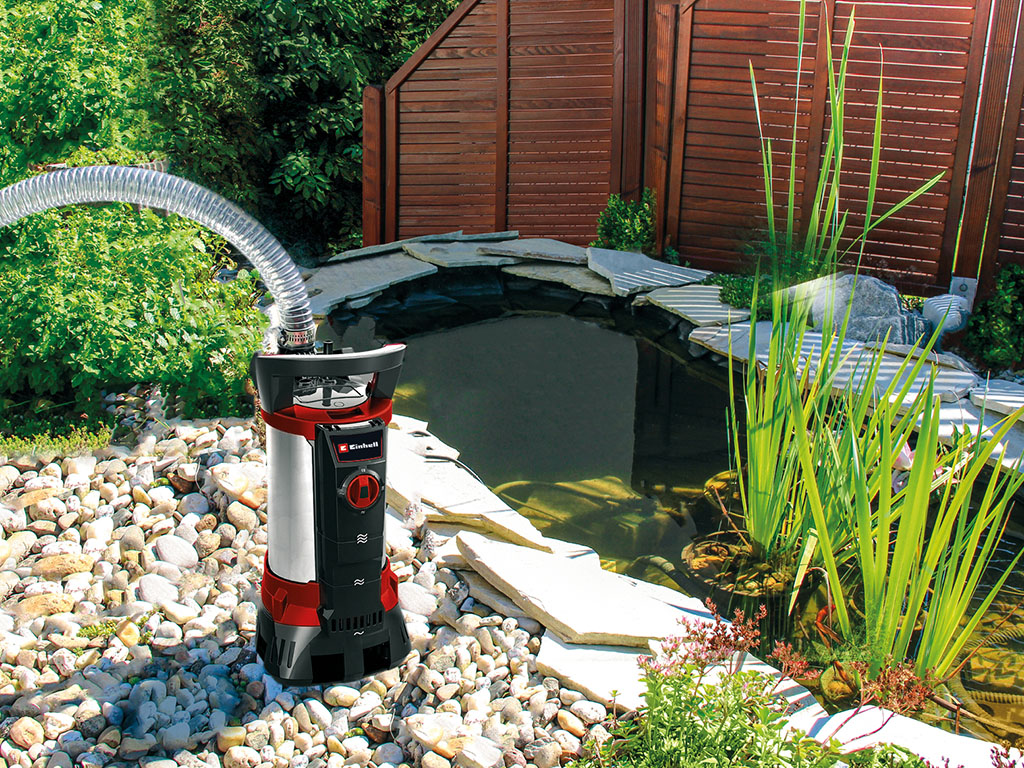
With our Einhell cordless tools, you don’t have to worry about cables potentially ending up in the water.
Step 1: Prepare the pond
First, prepare the pond for cleaning. If fish live in the pond and more extensive cleaning is required, you can temporarily move them to a holding tank. Some of the water should come from the pond to help the fish adapt as gently as possible to the temporary environment. Also switch off pond equipment such as pumps and filters, and remove coarse debris like leaves, algae, and plant matter using a pond net.
Step 2: Pump out the water: Do you need to completely drain the pond?
Pump out the pond water partially or more extensively, depending on the degree of contamination. Whenever possible, some of the water should remain in the pond to avoid unnecessarily disturbing microorganisms and the biological balance.
💡You can use the pumped-out pond water to water ornamental plants, shrubs, or trees in the garden. The nutrients it contains can even be beneficial. However, if you previously noticed water problems or bad smells, it is better not to reuse the water.
Step 3: Remove sludge
Remove deposits and blanket weed from the pond bottom as gently as possible using a sludge vacuum or by hand. You should clean foul-smelling and heavily soiled areas particularly thoroughly. However, make sure not to remove all of the bottom sludge, as a thin layer can serve as a habitat for important microorganisms.
💡Did you know that a sludge layer of just 5 cm can reduce the oxygen content in small ponds by up to 40%? You can later use filtered sludge as organic fertilizer for fruit trees or hedges, and dried sludge as fertilizer for flower beds in the garden.
Step 4: Remove algae
Not every algae formation is immediately a problem. Some blanket weed is part of the natural balance in many ponds. It usually becomes critical when algae growth increases significantly or the water quality deteriorates permanently. The best way to remove blanket weed is mechanically, for example with a pond net or by hand. Avoid aggressive chemicals wherever possible so as not to unnecessarily stress plants, animals, and the biological balance in the pond.
Step 5: Clean the equipment
Next, thoroughly clean the pond filter and pump, and check whether there are any signs of wear or damage. Only properly functioning pond equipment can ensure good water quality and sufficient water movement in the long term.
Step 6: Refill the water
After cleaning, refill the pond with fresh water and then check the most important water values. This also includes the pH value, which you can test using suitable test strips or water tests. For many garden ponds, a neutral to slightly alkaline range is beneficial. However, balanced planting, sufficient oxygen, and the lowest possible nutrient surplus are even more important for permanently clear water.
How can you keep pond water clear?
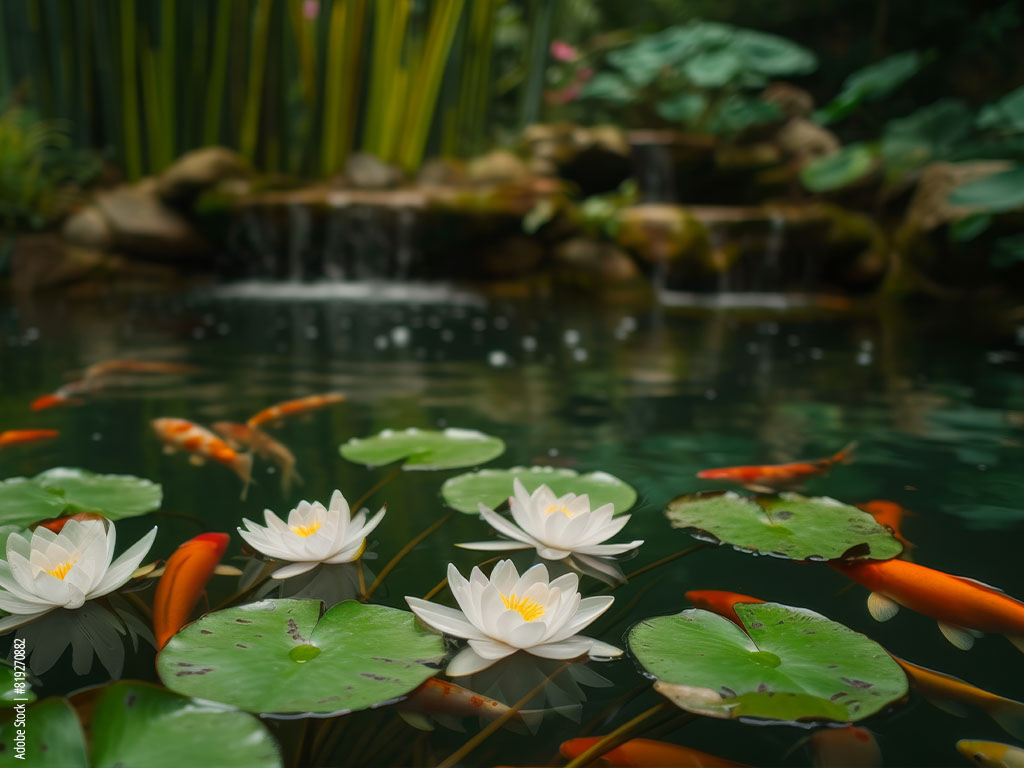
Clear pond water depends not only on regular cleaning, but above all on a stable ecological balance.
Many pond owners remove visible algae and sludge, but this does not address the actual cause of cloudy water. The key is usually to permanently limit nutrient input through regular plant pruning.
The following measures help keep pond water clear and healthy in the long term:
- Balanced planting: Pond plants absorb nutrients from the water and help limit excessive algae growth.
- Sufficient oxygen in the water: The right oxygen level is important for fish, plants, and microorganisms. Shallow-water and marsh zones with suitable planting can also support the ecological balance.
- Functioning filter technology: Reliable filter and pump technology is especially important in ponds with fish to keep water quality stable.
- Regular but gentle maintenance: Remove leaves, dead plant parts, and algae at regular intervals without disturbing the pond unnecessarily.
- Pond net in autumn: A net protects the pond from falling leaves and reduces organic deposits in the water.
Expert tip: Why are pond plants so important?
Pond plants are an essential part of a stable pond ecosystem. They produce oxygen, provide shelter for animals, and remove nutrients such as phosphate and nitrogen from the water. This helps to naturally limit algae growth. Regular, proper pruning supports healthy plant growth and also makes pond maintenance easier.
But be careful: not all pond plants are maintained in the same way. Pruning and maintenance requirements vary depending on the plant species. Many pond plants should primarily be cut back in autumn so that dead plant material does not remain in the pond over winter and negatively affect water quality.
Floating plants
Floating plants such as duckweed, frogbit, or water lettuce absorb many nutrients and therefore help combat algae growth, but this also causes them to multiply more quickly. To ensure sufficient light can still enter the pond, floating plants should be trimmed regularly throughout the year.
Underwater plants
Underwater plants are important oxygen suppliers in the pond and help maintain good water quality. However, species such as waterweed should not be allowed to grow too densely, so fish have enough room to move and the biological balance is preserved. Check their growth regularly and gently trim the plants back as needed
Water lilies
Water lilies are a decorative eye-catcher in the garden pond. To keep them healthy and prevent them from crowding out other plants, you should regularly remove dead leaves and faded plant parts. If necessary, overly spreading plants can also be carefully trimmed back.
Shrubs, perennials, and plants around the garden pond
Shrubs, perennials, and other plants around the garden pond also contribute to the overall appearance and should be maintained and pruned regularly. The GP-LS 18/35 Li BL pruning shears are especially helpful here, making it easy to remove dead leaves and overhanging branches.
📝Rule of thumb for planting
As a rough guideline, the leaves of water lilies and floating plants should not cover more than around one third of the water surface in total, so that enough light and space remain for other aquatic plants in the pond.
Clean the pond yourself or leave it to a professional?
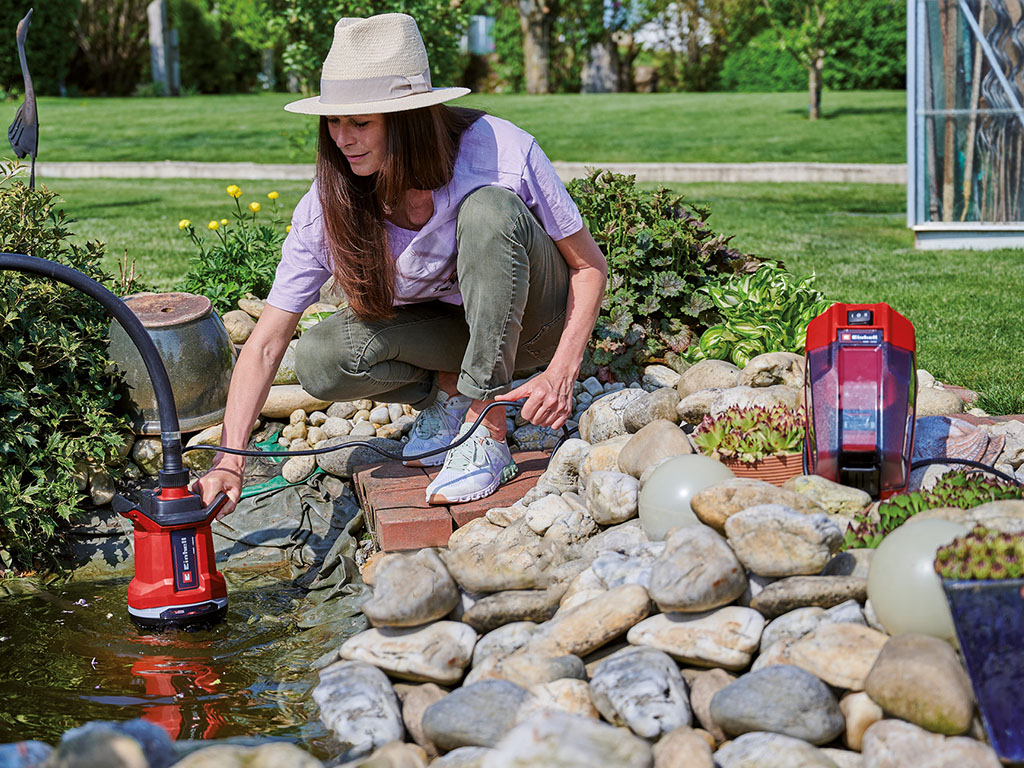
Whether you should hire a professional depends on the pond size, fish stock, technical complexity, and your budget.
Whether you can clean your pond yourself or should call in a professional mainly depends on its size, level of contamination, any water quality issues, and the pond’s stock. Hiring a professional can also quickly become expensive — so make sure you get proper advice and consider potential cleaning costs when planning a garden pond.
You can clean your pond yourself if:
- the pond is small to medium-sized
- you have the appropriate equipment
- there is no heavy sludge buildup or stubborn contamination
A professional may be useful if:
- the pond is heavily contaminated or silted up
- there are many or particularly sensitive fish living in the pond
- there are problems with the equipment or water values
Cleaning your pond yourself: These mistakes you should avoid
- Cleaning too often: Cleaning the pond too frequently or too thoroughly can quickly disrupt the biological balance and pH level, and remove important microorganisms.
- Using aggressive chemicals: Chemical products for algae or dirt can put unnecessary strain on plants, animals, and water quality.
- Removing all bottom sludge: A thin layer of sludge can serve as a habitat for beneficial microorganisms and therefore should not always be removed completely.
A great alternative to try: the mini pond
Spring inspiration
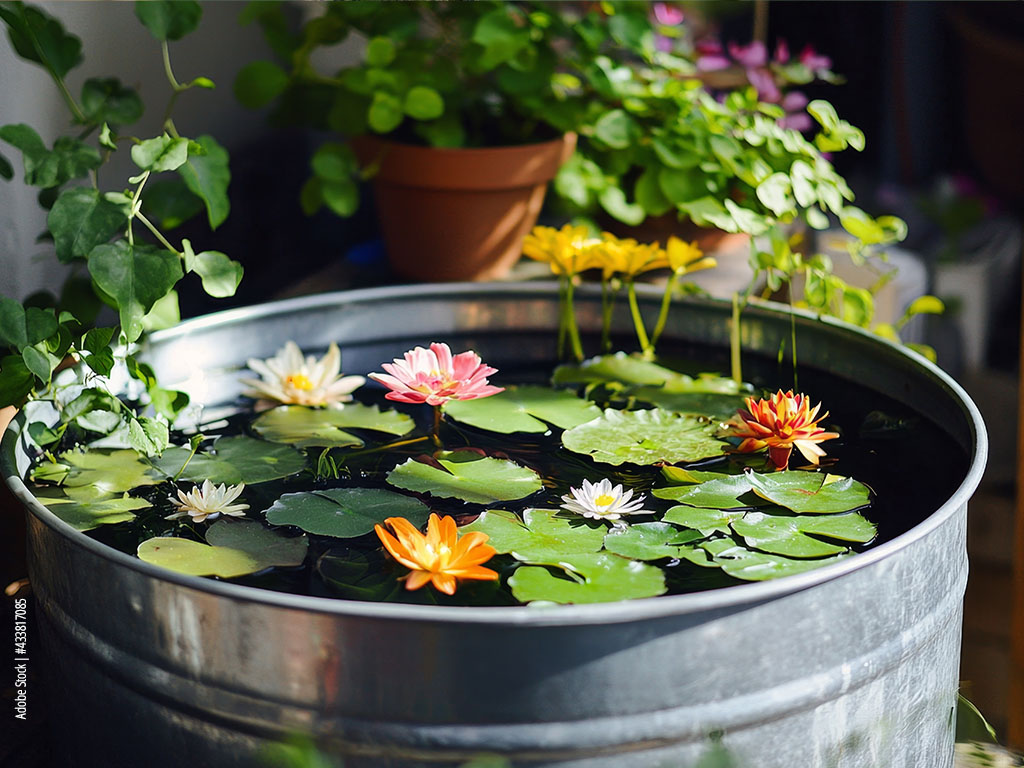
A mini pond for the balcony or patio is easy to set up and makes a real eye-catcher for your outdoor space.
A mini pond is a lovely alternative if you do not want to create a large garden pond or only have limited space available. In a suitable container, you can use water, suitable plants and, if desired, a small solar pump to create a decorative mini ecosystem. This creates a special eye-catcher on your patio or balcony while bringing more calm and natural charm to your outdoor space.
Tools featured in this article
Here we have listed all the tools from this article for you again.
Conclusion: Less sludge, more clarity
A clean garden pond is no coincidence, but the result of regular, well-planned maintenance. If you clean your pond properly, keep an eye on the water values, and support the ecological balance, the water will remain clear in the long term and your pond will stay a healthy, beautiful eye-catcher in the garden.

Published on 06.05.2026
Melanie Gellrich works as a student trainee in the online editorial team at Einhell, where she handles virtually all content relating to tools, garden equipment and accessories. Her go-to Einhell tool in her student flat-share is the TE-SV 18 Li cordless stick vacuum cleaner – because a powerful vacuum cleaner helps to quickly tidy up the flat, even in the midst of student life.